
-
Uddannelse
Find uddannelse
Studievejledning
Besøg AU
Kvalitet
- Forskning
-
Samarbejde
-
Om AU
Organisation
Kontakt

Kandidatuddannelse
| Fakta om uddannelsen Undervisningssprog | Studiested: Aarhus | Studiestart: August / september (ingen vinterstart) |
Finance and International Business (FIB) provides a deep understanding of how finance shapes firms, markets, and the global economy. By combining financial theory, data, and quantitative methods, the programme equips you to analyse complex business challenges in an interconnected world. You will learn to navigate market uncertainty, drive corporate value, and confidently evaluate the consequences of financial decisions.
Across the programme, you develop expertise in three closely connected areas.
You learn how firms create value through investment, financing, and governance. Analysing these dimensions involves exploring critical questions: Should a company invest in a new project? How much risk should it take on? How should value be distributed to shareholders? A central theme is how real-world frictions - including agency conflicts, asymmetric information, and imperfect markets - shape financial and strategic decisions. You also learn to identify, measure, and manage the resulting risks, including those arising from international operations.
You gain insight into international financial markets and the mechanisms that link economies around the world. You study international asset pricing, currency risk, and parity conditions, and examine how these factors affect prices and investment opportunities. This equips you to analyse multinational firms, evaluate global investment opportunities, and assess the financial consequences and risks of operating in an international economy.
Data analysis is central to the programme. You apply econometric methods, financial data analysis, and computational tools to study firms, markets, and international business decisions. These skills prepare you to evaluate empirical evidence, identify patterns in financial and economic data, and support data-driven decision-making in firms and financial markets.
I denne sektion kan du finde ud af, hvad der skal til for at komme ind på kandidatuddannelsen i Finance and International Business (cand.merc.).
De næste afsnit forklarer, hvordan du kan opfylde adgangskravene, afhængigt af om du har:
Derudover kan du finde ud af, hvilke sprogkrav der gælder, og hvilke rangeringskriterier vi vurderer din ansøgning ud fra, når vi prioriterer blandt de indkomne ansøgninger.
Følgende bacheloruddannelse giver dig retskrav på optagelse på kandidatuddannelsen i Finance and International Business (cand.merc.):
Retskrav betyder, at du har ret til at blive optaget på den kandidatuddannelse, der bygger oven på den bacheloruddannelse, som du har gennemført ved samme universitet. Det kræver dog, at du søger om optagelse senest tre år efter gennemført bacheloruddannelse.
Hvis du har en af de følgende bacheloruddannelser, opfylder du adgangskravene til uddannelsen:
*Bemærk, hvis din HA eller BSc i Economics and Business Administration fra Aarhus Universitet eller en anden dansk uddannelsesinstitution er færdiggjort før år 2010, vil det i forbindelse med behandlingen af din ansøgning blive vurderet, om den lever op til adgangskravene beskrevet under afsnittet ”Andre uddannelser der kan give adgang”.
Udover de bacheloruddannelser, som allerede er vurderet til at give adgang til denne uddannelse, kan der også være andre uddannelser, der opfylder adgangskravene afhængigt af fagsammensætningen og vægtningen af dine kurser.
Du kan få adgang til kandidatuddannelsen, såfremt universitetet vurderer, at din uddannelse har et niveau, omfang og indhold, som svarer til de faglige krav, der angives herunder.
| Du kan opfylde adgangskravet med en anden uddannelse, hvis du har følgende fagområder: | ECTS-krav |
Metode Hvoraf følgende fagområder er dækket:
| 15 |
| Marketing | 7,5 |
| Finansiering | 7,5 |
| Regnskab | 7,5 |
| Ledelses- og Organisationsteori | 7,5 |
| Mikroøkonomi | 5 |
| Operations Management | 5 |
| Ekstra ECTS inden for ovennævnte erhvervsøkonomiske fagområder | 20 |
| Bachelorprojekt | 10 |
| I alt | 85 |
| Hvis du har en bacheloruddannelse i erhvervsøkonomi-erhvervsret (HA(jur.)) fra Aarhus Universitet med studiestart september 2014 eller senere, skal du sammenlagt have bestået 10 ECTS inden for nedenstående erhvervsøkonomiske fag: |
|
| Hvis du har en Professionsbachelor i finans fra Erhvervsakademi Aarhus, skal du have én af følgende kombinationer for at opfylde adgangskravene: |
Brancheretning: med følgende valgfag:
|
Brancheretning: Finansielle forretninger (”Studieretning A: Finansielle forretninger” og ”Studieretning B: Finansielle forretninger”) med følgende valgfag
|
| Hvis du har en uddannelse som Markedsføringsøkonom i kombination med en Professionsbachelor i international handel og markedsføring fra Erhvervsakademi Aarhus, skal du have bestået følgende valgfag: | ECTS-krav |
| BSS meritmodul (indeholdende Metode 5 ECTS, Finansiering 5 ECTS og Operations Management 5 ECTS) | 15 |
For ansøgere med en af de ovennævnte professionsbacheloruddannelser fra et andet erhvervsakademi vil det blive vurderet, om valgfagene svarer til ovenstående valgfag.
Ansøgere med en anden professionsbacheloruddannelse vil blive vurderet ud fra adgangskravene beskrevet i afsnittet ”Andre uddannelser der kan give adgang”.
Vi kan ikke på forhånd vurdere, om netop din uddannelse vil opfylde ovenstående krav. Vi vil derfor anbefale dig at søge ind på uddannelsen, hvis du selv vurderer, at du opfylder fagkravene. Det er i den forbindelse en god ide at sammenligne din uddannelse med de direkte adgangsgivende uddannelser.
Du skal udfylde dette bilag hvis du har taget din bacheloruddannelse på et universitet uden for Danmark. Bilaget bruges i vurderingen af din ansøgning.
Download bilag
Alle kandidatuddannelser på Aarhus Universitet har adgangsbegrænsning. Det betyder, at du ikke er garanteret optagelse, selvom du opfylder adgangskravene. Når vi skal prioritere blandt ansøgerne, vurderer vi din ansøgning ved at kigge på en række faste rangeringskriterier, som du kan se herunder.
Hvis du har retskrav, er du garanteret en plads på uddannelsen og behøver ikke forholde dig til rangeringskriterierne.
Hvis der er flere kvalificerede ansøgere end ledige studiepladser, lægges der vægt på følgende kriterier ved udvælgelsen (hvert kriterie vægter 1/3):
* Fagområderne vurderes ud fra følgende pointsystem: 1 point pr. ekstra ECTS inden for det relevante fagområde. Du kan maksimalt få 15 point indenfor dette kriterie. EKSEMPEL: Hvis du fx har 10 ECTS inden for et relevant område, hvor kravet er 7,5 ECTS, får du 2,5 point.
Vær opmærksom på, at karakterer opnået efter ansøgningsfristen ikke tages med i vurderingen.
Du skal kunne dokumentere, at du har engelskkvalifikationer svarende til dansk gymnasialt B-niveau. Hvis du har retskrav på optagelse (se ovenfor), er du ikke omfattet af denne regel.
Læs hvordan dit engelsk-niveau skal dokumenteres, hvis du ikke har en dansk gymnasial uddannelse.
STUDIEORDNING
I studieordningen kan du finde yderligere oplysninger om, hvad de enkelte fag indeholder. Du kan også se studiets opbygning, og hvilke krav, der bliver stillet til dig som studerende – herunder eksamensformer og eksamenskrav.
Uddannelsen er godkendt med engelsk som udbudssprog. Udbudssproget er det sprog, der som udgangspunkt undervises i på uddannelsen.
I studiediagrammet nedenfor kan du klikke på de forskellige fag og læse de enkelte fagbeskrivelser.
Uddannelsen består af 4 semestre. På de første to semestre har du alle obligatoriske fag, mens du på de sidste to semestre har mulighed for selv at specialisere dig i en ønsket retning.
På første semester følger du forudsætningsfag, der danner et metodisk og akademisk grundlag for de følgende semestre.
På andet semester følger du specialiseringsfag.
På tredje semester kan du vælge valgfag inden for dit interesseområde. Fagene kan tages enten på Aarhus BSS i løbet af semesteret, på AU Summer University eller på et af vores mere end 300 partneruniversiteter i udlandet. Du kan også deltage i et projektorienteret forløb i en virksomhed i Danmark eller i udlandet.
Fjerde semester er dedikeret til speciale. Du kan frit vælge specialeemne, og på den måde får du chancen for at koncentrere dig om og specialisere dig inden for et specifikt interesseområde.
Kontakt Jorge Hansen ([email protected]), hvis du har spørgsmål til linjen eller et af fagene.
As a Finance and International Business (FIB) student, you become part of an active community alongside the academic programme. Students, alumni, faculty, and industry professionals meet regularly to exchange ideas, share knowledge, and build new connections.
Student life in the FIB programme is supported by the student organisation Finance and International Business Union (FIBU). FIBU creates an engaging environment for students and strengthens the connection between the academic programme and professional practice.
FIBU organises career events such as company presentations, networking sessions, and industry talks. These events give you first-hand insight into a range of careers and create opportunities to meet representatives from companies and organisations. Previous events have covered areas such as corporate finance, consulting, and risk management. By meeting professionals working in these fields, you can explore potential career paths, see how the knowledge and skills you develop during the programme are applied in practice, and grow your own network.
FIBU also hosts social events that bring students together outside the classroom. Through informal gatherings, dinners, and other activities, you get to know students across cohorts and can build lasting friendships.
In addition, FIBU represents students in dialogue with faculty and programme coordinators, giving students a voice in the continued development of the programme.
-experienced, photographed and filmed by the students themselves.
With thousands of pictures #AUInternational, #AarhusUni gives insight into the everyday life as a student at AU; the parties, procrastination, exams and all the other ways you’ll spend your time at university.
Billederne er brugernes egne, delt med #Yourniversity, #AarhusUni og fagspecifikke AU-hashtags.
Finance and International Business (FIB) graduates build careers at the intersection of finance, strategy, and data-driven analysis. The programme prepares you for roles in which you analyse financial performance, manage risk, and support strategic decision-making.
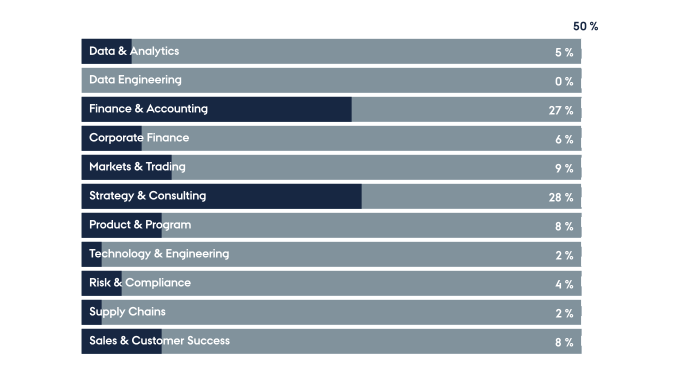
Many graduates begin their careers in strategy, consulting, finance, or accounting, in roles such as strategy consultant, business analyst, financial analyst, or business controller. Others start as corporate finance analysts, market analysts, risk analysts, or in data-oriented roles involving financial, market, or commercial data.
FIB graduates work across many industries, not only in the financial sector. They build careers in industries such as professional services, energy and utilities, and retail and consumer goods. This reflects the core idea behind the programme: financial, analytical, and strategic thinking is valuable in any organisation that invests, competes internationally, and operates under uncertainty.
With experience, graduates often advance into senior specialist roles, such as corporate finance manager, senior risk specialist, or senior business controller, or move into leadership roles in finance, corporate development, strategy, or general management.
To further support these career opportunities, the programme is closely connected to the business community through its Advisory Board. The Board provides strategic insight and guidance to ensure the programme remains aligned with industry needs and future trends. It actively contributes to discussions on curriculum development, the design and content of core courses, and the integration of emerging technologies such as generative AI. The Board also advises on desired graduate competencies, employer practices, and the implications of forthcoming graduate reforms. Get inspired by the career paths of the current members of the Advisory Board for Finance and Finance and International Business.
These are the typical job categories that our graduates work in.
These are the typical industries that our graduates work in.
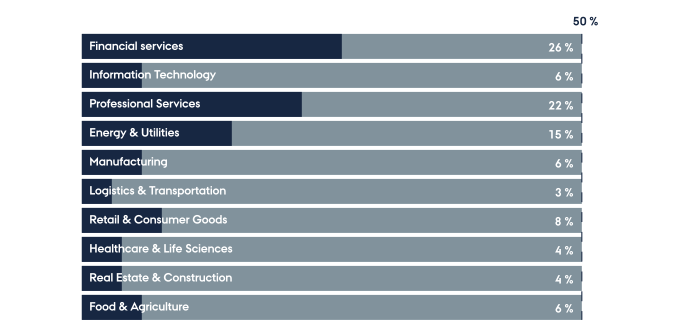
These analyses are based on Aarhus BSS graduates from 2015–2025 and were conducted in 2026. The information reflects the most recent job and industry identified at the time of the analysis. Data were gathered from publicly available sources and interpreted with the assistance of large language models. Although a sample of results was manually verified, the findings may involve incompleteness or classification uncertainty.